Stone walls are a Hudson Valley tradition, but there's a big difference between a wall that's stacked for looks and one that's built to hold back earth. The difference is almost entirely below the surface — in the base, the drainage, and the way the wall is set against the soil.
If you're planning a retaining wall, here's what actually determines whether it stands for decades or starts to lean after the first winter.
The Base Does the Work
The most common reason a retaining wall fails is an inadequate base. A wall built on loose topsoil or a shallow trench will settle unevenly as the ground freezes and thaws. We excavate down to stable material and compact a crushed-stone base in lifts so the wall starts on something that won't move.
For taller walls, that base needs to be wider than the wall itself and set level in both directions. Skip this step and the whole wall is built on a slow-moving foundation.
Drainage Is Non-Negotiable
Soil behind a retaining wall holds water, and wet soil is heavy. When that water has nowhere to go, hydrostatic pressure builds until it pushes the wall outward. This is the single most common cause of bulging, leaning walls.
- A layer of clean crushed stone behind the wall lets water drain down instead of pressing against it.
- Perforated drain pipe at the base carries water away to a daylight outlet or dry well.
- Weep holes or gaps in dry-stack walls give trapped water an escape path.
Without drainage, even a well-built wall is fighting a losing battle against the soil behind it.
Batter and Setback
A retaining wall shouldn't be perfectly vertical. A slight lean into the hill — called batter — lets the wall resist the outward push of the soil. Each course of stone is set slightly back from the one below it, so the wall leans into the load it's holding.
This is true whether the wall is dry-stacked fieldstone or mortared stone. The geometry is what makes it stable, not just the weight of the material.
Dry Stack vs. Mortared
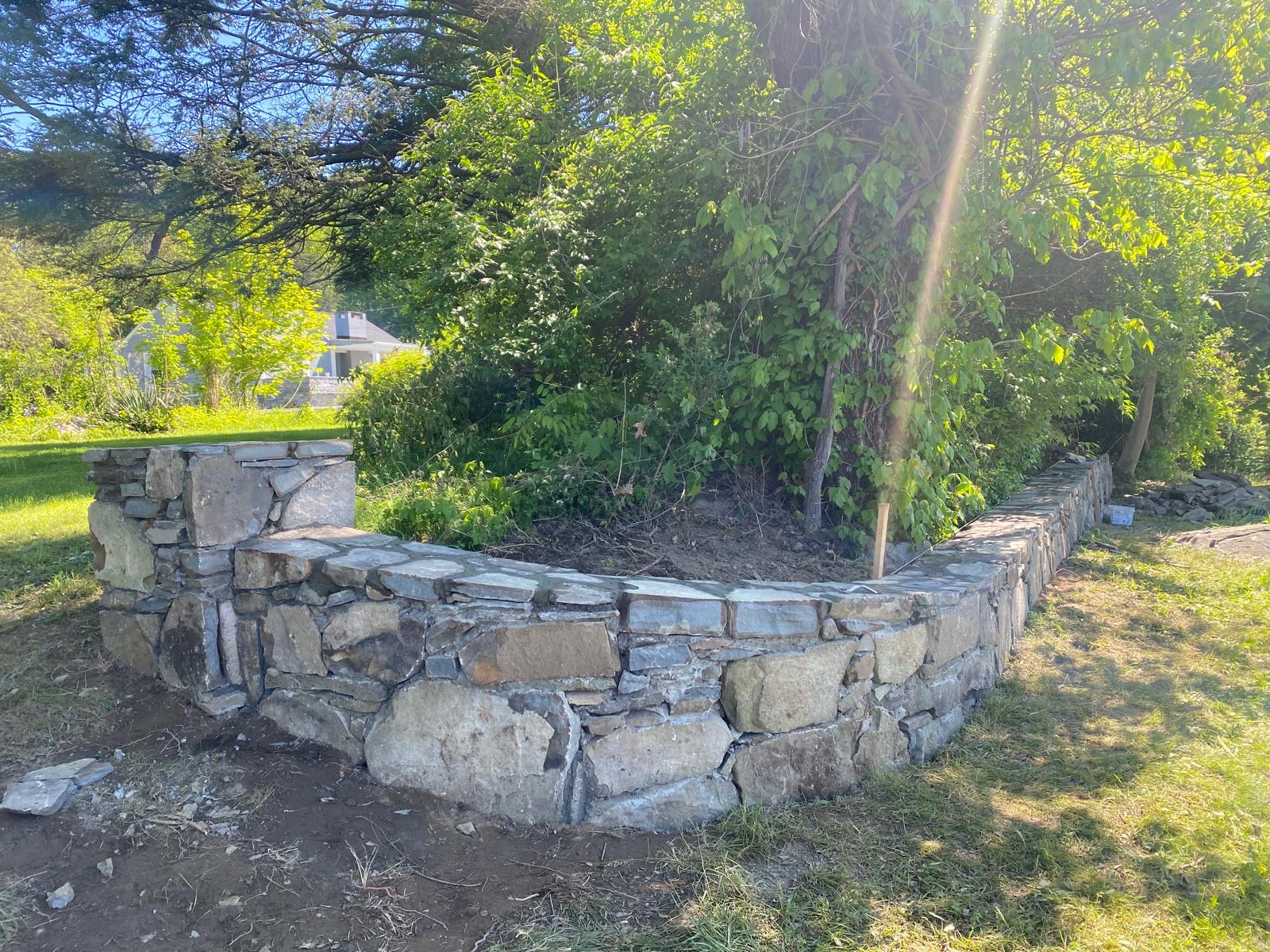
Dry-stacked fieldstone walls let water drain through the joints naturally and flex slightly with freeze-thaw, which makes them forgiving in our climate. Mortared walls are more rigid and need drainage built in deliberately, but they allow for taller, more formal designs.
Both can last for generations when the base and drainage are done right. The choice usually comes down to the look you want and the height of the wall. Our stone walls service covers both approaches.
Thinking About a Stone Wall?
A well-built stone wall adds usable yard space, controls erosion, and looks like it belongs on the property. If you're planning a retaining or landscape wall, we'll walk your site, talk through drainage and material, and give you a free estimate.